
Sunday 4 Oct, HHN, boat winterizing day 4:
Another beautiful day with a chilly start. Just love this early autumn weather here in Maryland: fleece needed in the morning but just shorts and tee-shirt during the day. Perfect boat-pottering weather.
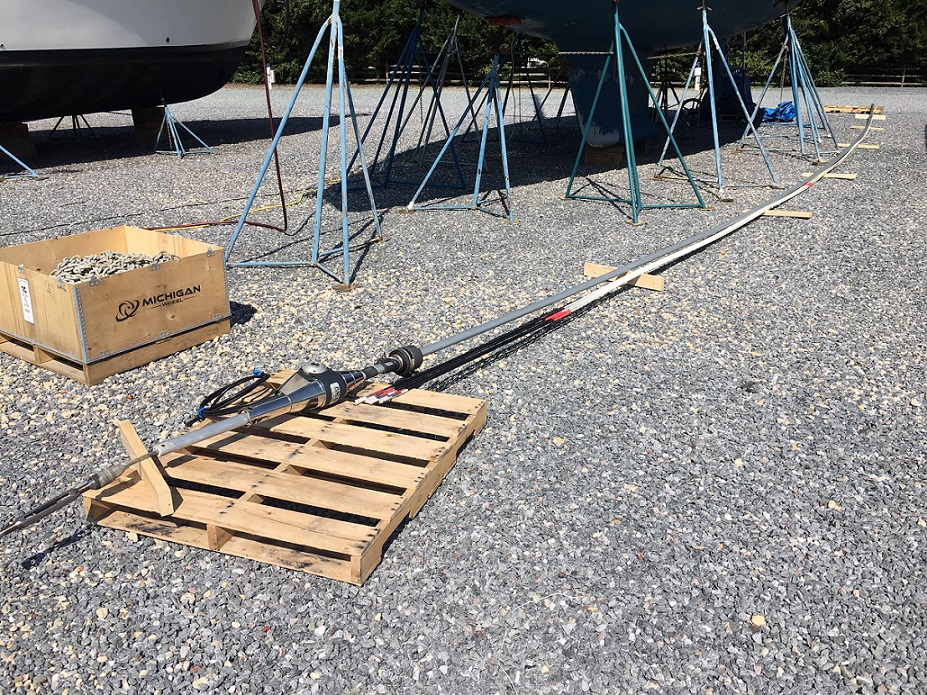
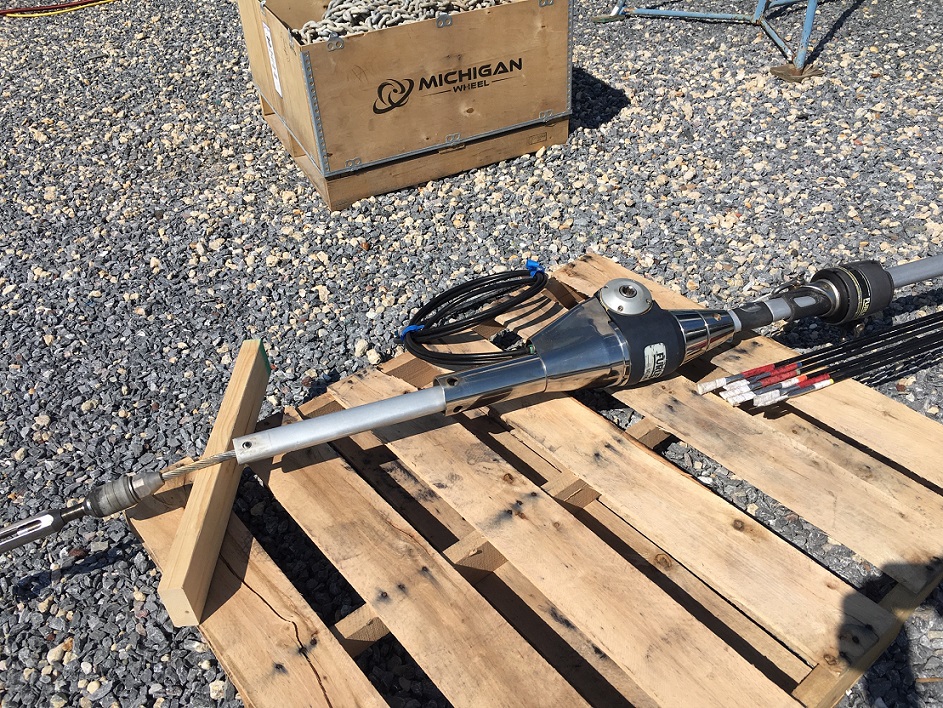
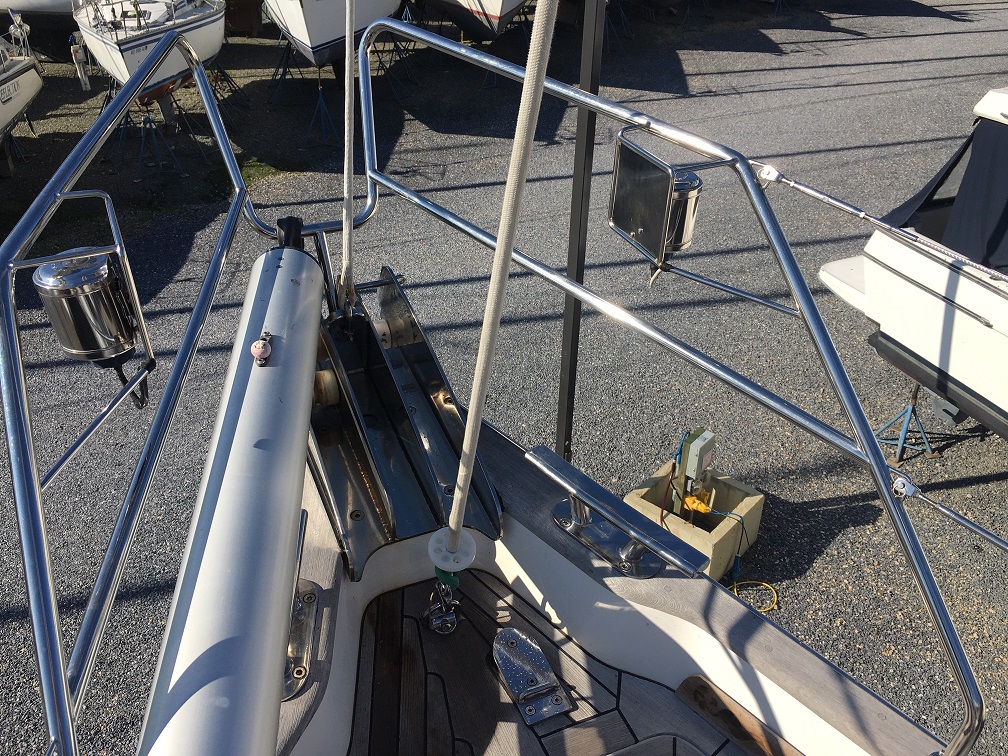
The morning project is to lay down the forestay complete with Furlex furling system. But first I want to see if I can successfully ease the tension on all 6 shrouds. Using very large wrenches I’m pleasantly surprised that I can get one turn off each bottle screw, even if it does take all my strength to do so. My fear was that they would be rock solid and a risk of galling the threads. With the rig pressure slightly released I’m now confident that when I call the rigging guys the shrouds will unscrew relatively easily, and more importantly quickly (when their time-clock starts ticking, it’s $100 per hour, for each of them!).
Ray arrives at spot-on 9am and we conjure up the plan to remove the forestay:
1) Secure the dyneema genoa halyard to the bow and tension up. (this is most important because along with the cutter stay, it will hold the mast up once the forestay is removed …. a falling mast = not good!
2) Loosen the forestay bottle screw and get the main pin ready to release.
3) up the mast on in the riding belt using the main halyard, I then …
4) tie the spinnaker halyard onto the top of the furlex, and Ray pulls up on the halyard to take pressure off the upper pin.
5) Remove the split pin, main pin and washers (without dropping them!)
6) Ray eases the spinnaker halyard to ensure the forestay disengages
7) With me back at deck level, I remove the forestay lower pin while Ray, on the ground, pulls on a tag line to the hydraulic furler, pulling it over the bow.
8) While Ray pulls the furler away for the boat, I lower the whole forestay to the ground by gently easing the spinnaker halyard.
And that plan worked perfectly. Last time we removed the forestay in 2016, it took 4 people to do it, so I’m quite relieved when it is safely down on the ground, with just Ray and I doing the operation. However, it’s still quite alarming just how much the aluminum furling tube bends as it comes down. If I hadn’t seen that before, I would be certain we had damaged something.
After patting each other on the back, we contemplate removing the cutter stay too. But decide to do that later, when we actually know the day the crane will be available to remove the mast. The dyneema halyard holding up the mast is strong, but we both feel happier knowing the cutter stay is still in place to help.
Next job is to remove the vang so I can prepare releasing the boom from the mast, to have it perfectly ready to lift down once the crane arrives. Crane time is not cheap! The hydraulic vang holds up the weight of the boom with a hi-pressure nitrogen cylinder. And for it to hold the boom down against the upward force of the sail (when sailing) we use hydraulic pressure on the opposite side of the N2 piston.
So while holding the boom’s weight by the traditional method (topping lift line that goes from the end of the boom to the top of the mast) we need to jiggle the vang hydraulics to the exact position where there is neither tension nor compression on the vang. Only then can I release the pin that secures it to the boom. Sounds complicated, but once you’ve done it a few times it’s very simple. That part is indeed simple. But on the lower pin, that secures the vang to the mast, we have a problem. The pin’s securing screw will not budge and eventually (even using a heat gun) the allen-socket rounds off. I spend several hours in the afternoon drilling and using an easy-out tool to remove it. One new screw added to the shopping list!
With the 2-man jobs all complete for the day, Ray heads home to cut the grass. A job I thankfully don’t have to do these days. But, if we leave Cloudy ashore much longer we may well find a lawn growing on her decks!
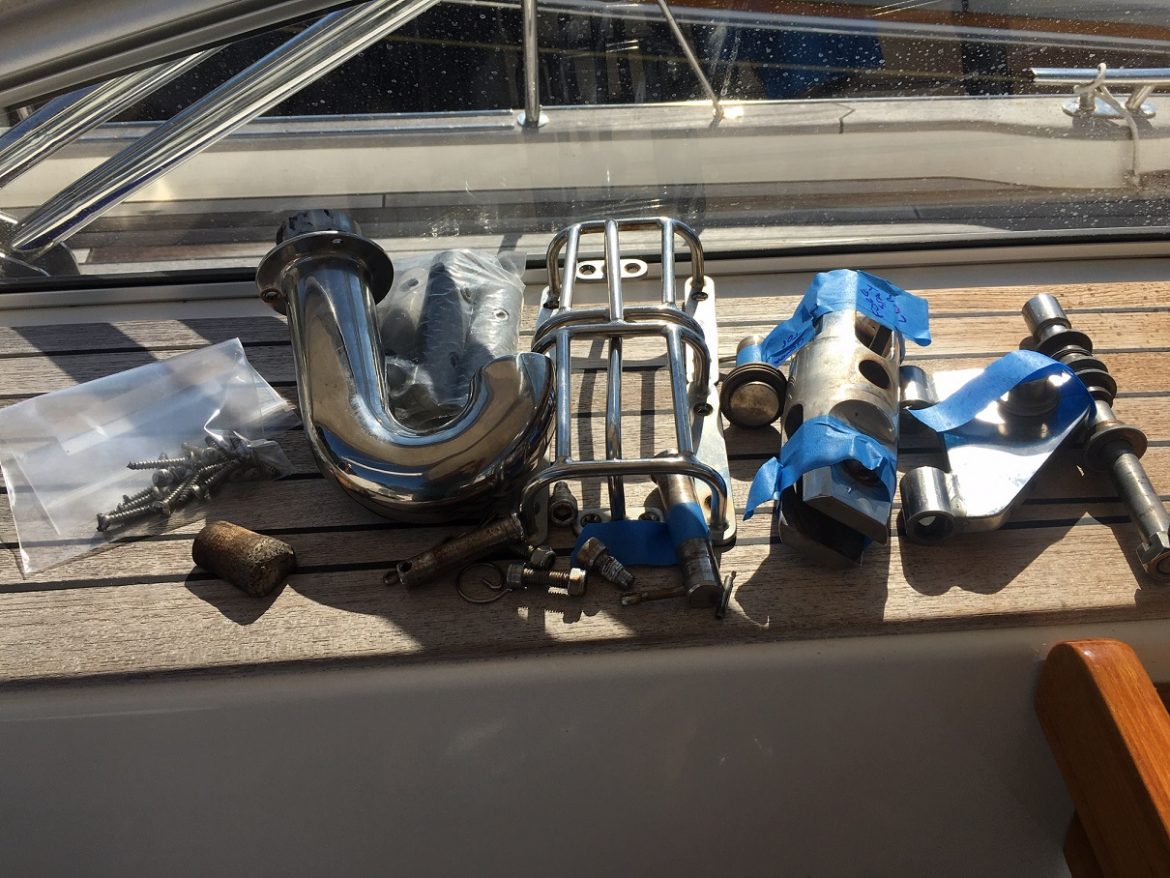
During the afternoon I clean up all the tools and label all the rigging bits-&-pieces so far removed. There’s going to be quite a collection of them and, knowing my memory, in one year’s time when we reassemble, I won’t know what went where unless they are all clearly marked. I also spend time getting that damned vang screw out.
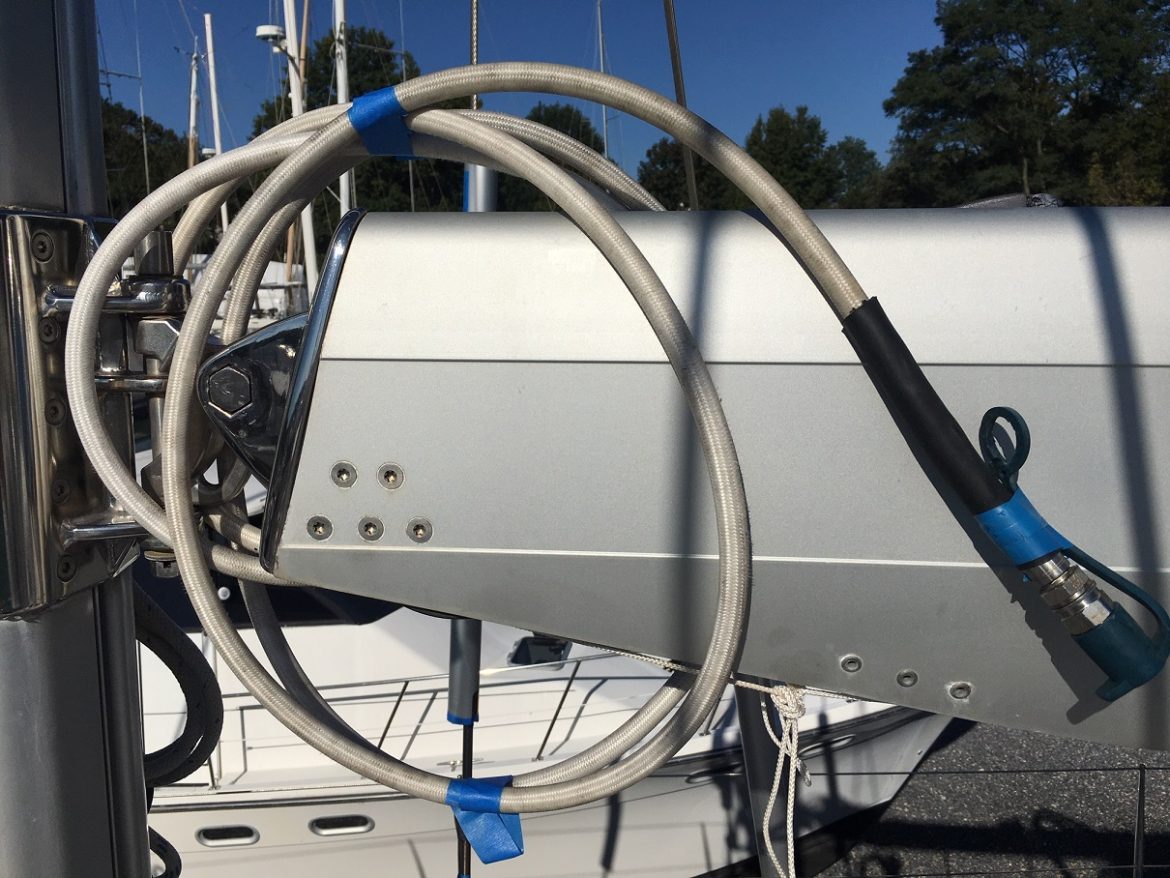
And while I’m doing that I get rained-on by bits of dried rubber that is coming off the outer layer of each outhaul hydraulic hose, which are dangling above my head. I’m sure I didn’t see any cracking on these hoses previously, but right now the outer layer on each hose is completely shot and falling off in small pieces all over the deck. My first thought is “those hoses will need replacing”.
But on closer inspection, the under layer still looks like new. Given that the failed outer layer is only designed to protect the hose from UV and the general elements, maybe I’ll simply recoat the hoses using good quality heart shrink. It’s got to be cheaper than new hoses, not to mention all the hassle of bleeding the air out of the system after changing to new hoses. On the other hand, if either of these hoses every fails, we can kiss goodbye to using the mainsail…. hmmm. Anyway, I spend about an hour scraping off all the failed outer layer so at least the hoses are clean and not continuously raining black bits on the deck.
Just as Cloudy is looking all shipshape again, I get visitors. Ralf and his wife (sorry, I already forgot her difficult name!) from the HR43 Flora have come to say hi again. They come up for a cup of tea and we chat about our beloved Hallberg Rassys and cruising life in general. They are a very nice couple and it feels good to talk to other HR owners.
I have a quiet evening cozy inside the boat, relaxing for once, reading my new book. It was a good day and we are now totally ready to have the mast taken down. My first stop tomorrow morning will be the riggers, to secure a de-masting day.
