

Saturday 3 Oct, boat winterizing day 3:
Brrrrr! Damned chilly last night. Had to put the heating on at 4am and in the early morning there were frost crystals on the spray top. But once the sun was up it turned into a beautiful warm day. And, most importantly, calm enough to attempt to take the mainsail down. A vital first step towards bringing the mast down next week. And a job that must be done on a weekend for reasons outlined later.
During the morning I unlatch and lift the 2 hydraulic furlers for the genoa and cutter, giving us access to the bottle screws. To get the pin out of the genoa furlex I have to lower the anchor. I only dropped it 3 metres to the ground, but the deck is already covered in rust particles. Time to investigate re-galvanising of the chain, I think.
Ray arrives at midday and I go up the mast to undo all the garden wires that I had placed back in June, to stop birds roosting on the spreaders. The technique seems to have worked, because so far very little bird poop on the decks. This time of year, the birds eat the berries then proceed to carpet-boom the yachts with their purple-poop, which is almost irremovable!
With the wires removed, the mainsail can now unfurl out of its slot. The air is almost totally windless with just the odd puff to worry about. To take the mainsail down we first have to unfurl it and remove all 6 long vertical battens, before we can lower it on the halyard. While doing this, the slightest bit of wind could catch in the sail and make the boat unstable on its chocks. It’s the reason we really have to get this done over the weekend without anyone around. The guys in the yard would go crazy if they saw us doing this rather reckless task while the boat is on chocks. Ray is rather concerned but has the idea of rolling the sail vertically as it comes out, while I attempt to remove each batten. It’s a good idea and reduces the exposed sail area significantly.
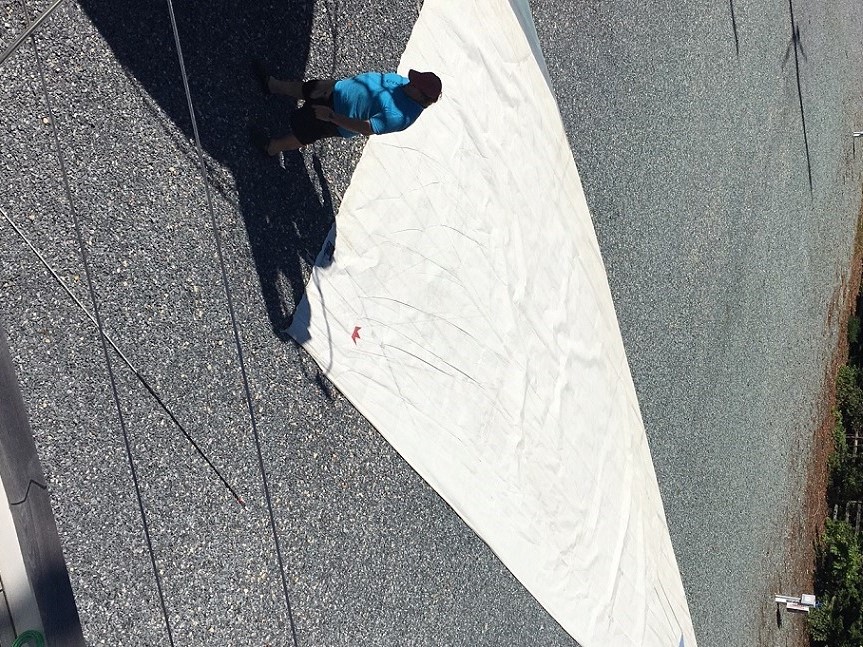
First batten doesn’t go well, I only pull out 1ft. The bottom joint in the batten has broken, leaving the rest stuck inside the batten pocket. When we last took the mainsail down in Antigua 30 months ago, it took five people, with one person in a riding belt cutting out such broken battens. Needless to say, with only Ray and I doing this, my heart is racing, whilst praying for no gusts. So, the first batten pocket has to be cut open, and luckily the rest of the batten was in one piece and I can pull it out. Thankfully, all the other battens come out in one piece, except batten #5. That one breaks ½ way up. But I’m not going up in the riding belt to retrieve it. We instead decide just to drop the sail over the side and dump it on the ground, as is, then retrieve that remaining piece. 15 minutes later the mainsail is conquered and lying spread-eagle on the ground, all battens removed. And luckily, following that heavy rain, the yard’s shingle is nice and clean.
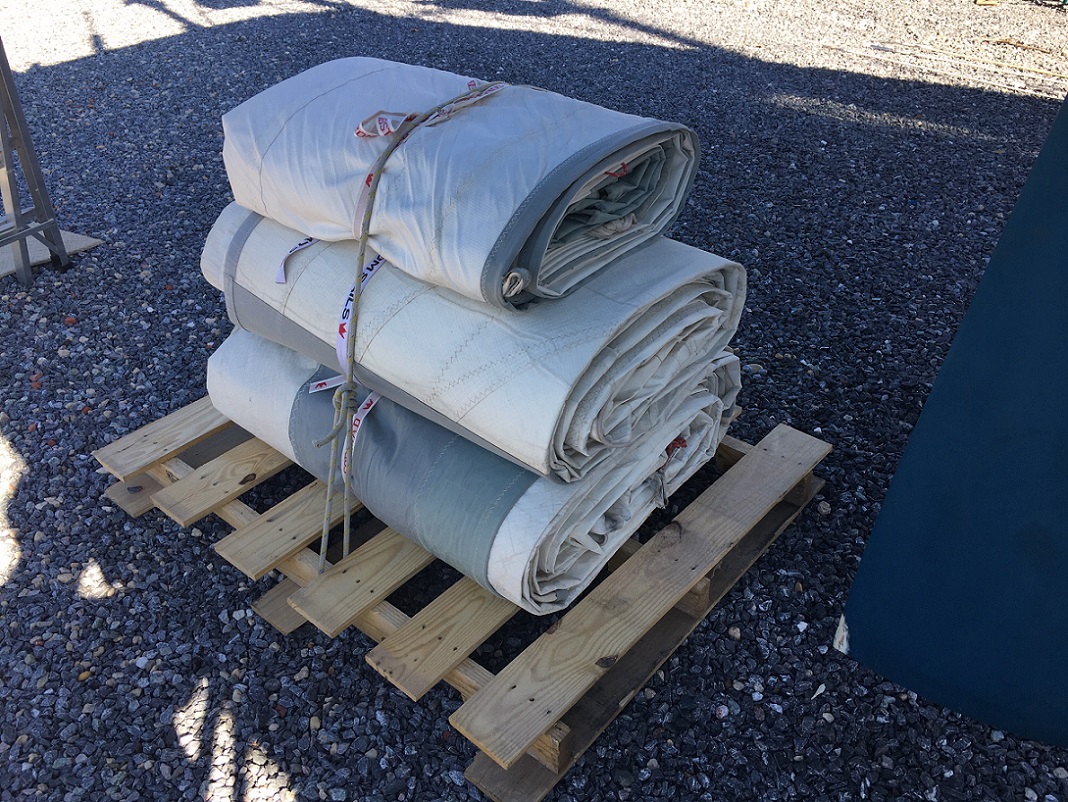
After measuring the luff and foot of the sail (so that I may try to sell it) we get it folded. I miss my sail folding partner, Oana (not her favorite task!) but Ray is very much up to the job and soon it’s neatly folded and stacked on a pallet along with the genoa and staysail. There is a sail loft in Annapolis (Bacon Sails) that sell secondhand sails. I’ll take them there and see if they think these sails are eligible for their stock.
On further inspection of the battens, I see that the technique we tried in Antigua worked perfectly. After joining the battens sections into their full lengths ready for insertion, we had placed a 1ft length of good quality heat shrink over each joint. All the joints we had done this to have held together for the last 30 months. Unfortunately, a few of these joints would overlap when the sail was furled, so I decided not to risk the extra bulk of the heat shrink on these joints. And it’s those ones that had failed. Thankfully, the new sails will have continuous battens with no joints.
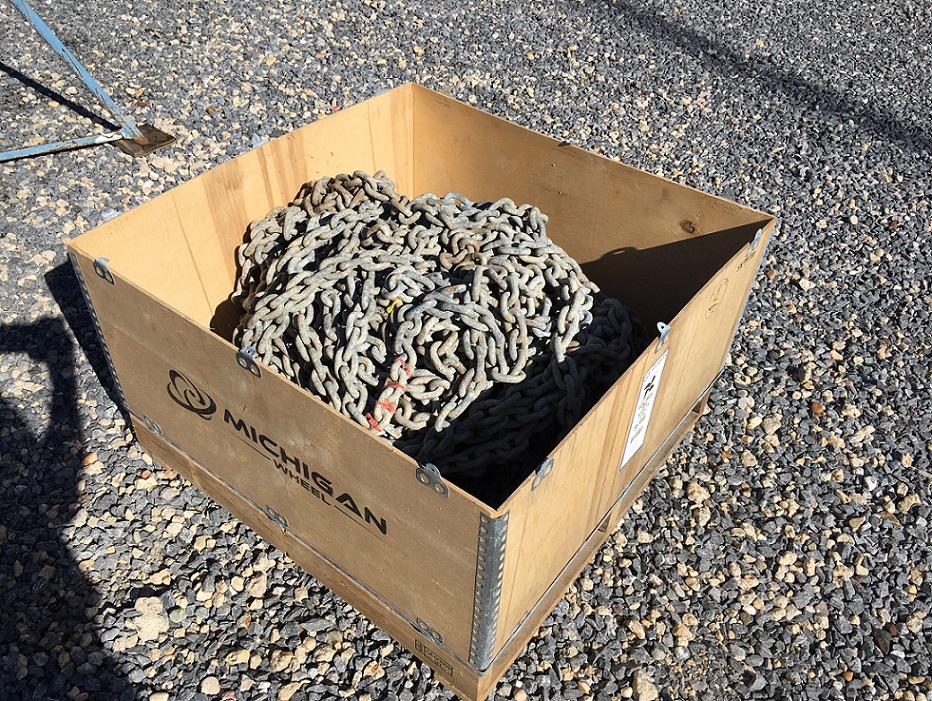
While we still have the mast up, and the ability to lift heavy things up onto deck, we lift the Ultra anchor for safe keeping. Then we spool all the 100m of anchor chain onto a pallet. As mentioned above, I will try to get it re-galvanised. Having said that, it’s only really the first 30 metres of chain that is rusty. The rest (mostly unused) still has good galvanizing. So in the worst case, we will simple reverse the chain when we put it back in the boat.
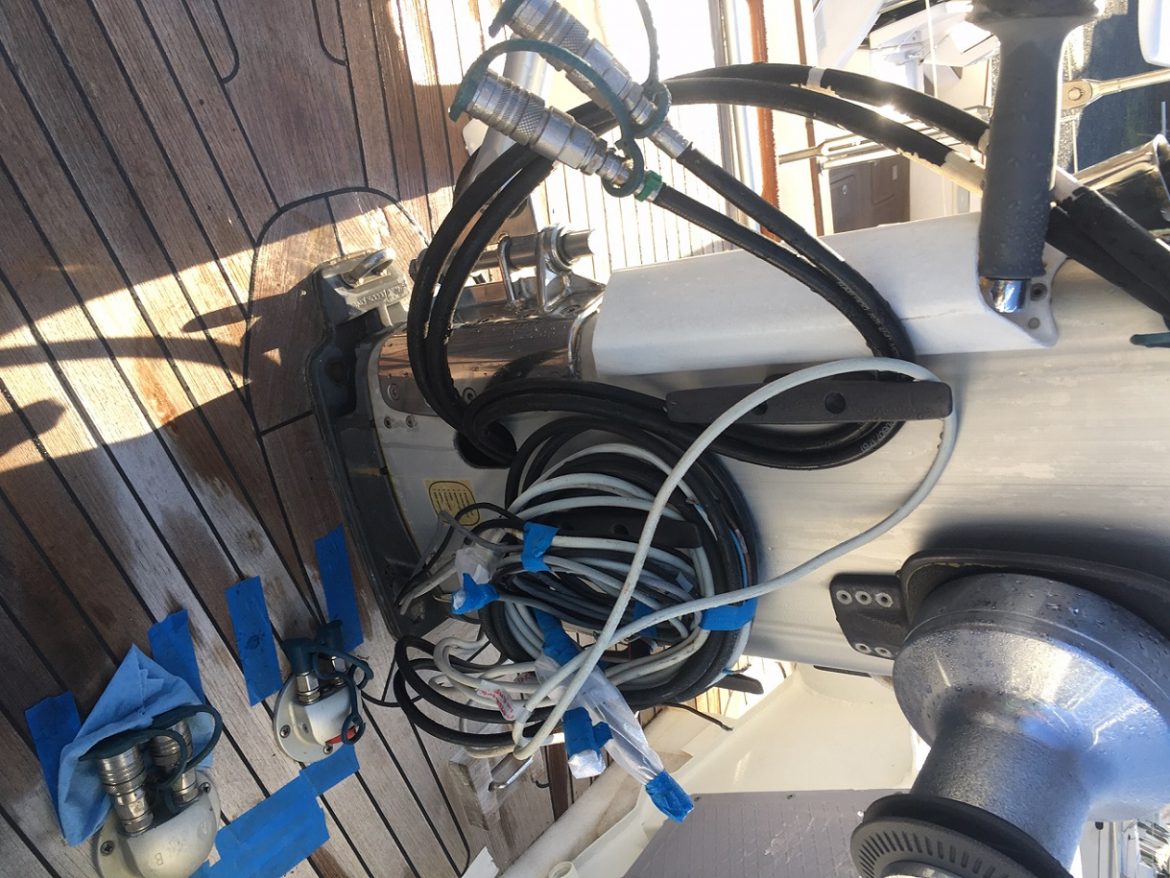
Next job is to take down the genoa and cutter Furlex. But it’s been a hot day so we decide to defer till tomorrow. There’s no rush, and removing the forestay is not a job to do when you are tired. So the rest of the day is pottering. I relubricate all the bottle screws, disconnect the last of the hydraulic quick connects. and disconnect all the wiring for the mast. It’s not till you have to disconnect this wiring that you realise just how much electrics are up the mast. Quite a bundle!
Again, as the sun goes down the temperature drops sharply. Time for a nice warm shower, lunch and an early night. I’m happy that we are now ready to call in the professionals to take the mast down. Big mast = big job!
